2026 FAFSA Updates: Critical SAI Rules Changing College Aid
Anúncios
Are major adjustments to federal financial aid formulas about to alter your family's higher education funding package? Navigating the upcoming 2026 FAFSA Updates is vital for students and parents aiming to maximize federal grant access and institutional awards this academic year.
Revised Student Aid Index (SAI) calculation guidelines are shifting how family income, multiple college enrollments, and small business assets dictate aid eligibility. These policy changes directly impact Pell Grant qualification thresholds, federal work-study allocations, and subsidized loan distribution across middle- and lower-income households.
We break down core formula adjustments, essential filing strategies, and key application timelines to help you protect your higher education funding. Read on to master these new financial aid rules and secure the tuition support your student deserves.
Understanding the Shift to Student Aid Index (SAI)
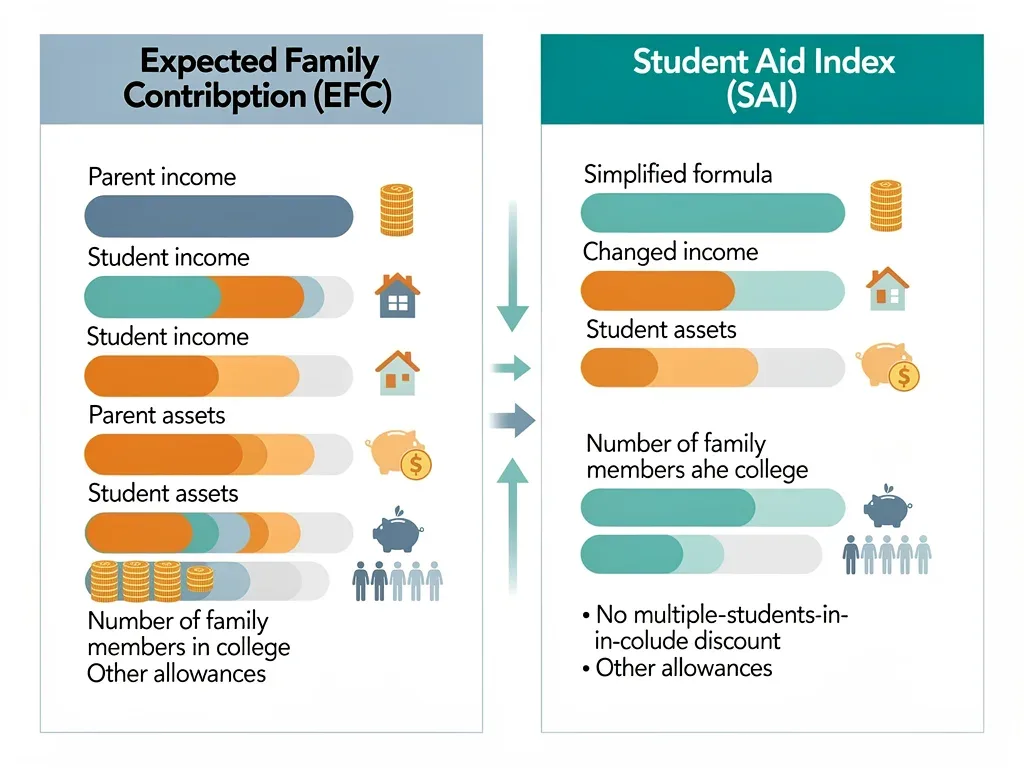
The landscape of college financial aid is undergoing a significant transformation with the impending 2026 FAFSA updates. These changes are primarily centered around the replacement of the Expected Family Contribution (EFC) with the new Student Aid Index (SAI).
This shift is not merely a renaming but represents a fundamental overhaul in how a student's financial need is assessed. The implications for families and students seeking federal financial assistance are profound, necessitating a thorough understanding of the new methodologies.
Anúncios
The move to SAI aims to simplify the application process and expand eligibility for federal student aid, but it also introduces new complexities that require careful navigation.
The Four Critical SAI Calculation Rules Explained
As part of Navigating the 2026 FAFSA Updates, four key rules stand out as particularly impactful. These rules will directly influence how a student's eligibility for federal aid is determined.
Understanding these specific changes is paramount for prospective students and their families to accurately anticipate their financial aid packages. Each rule addresses a different aspect of financial assessment, collectively reshaping the aid landscape.
Anúncios
These critical rules aim to create a more equitable and transparent system, though their practical application will vary for individual circumstances.
Rule 1: Elimination of the Number in College Factor
One of the most significant changes is the elimination of the "number in college" factor from the SAI calculation. Previously, having multiple children enrolled in college simultaneously reduced the EFC for each student, effectively increasing their aid eligibility.
Under the new SAI rules, this factor will no longer be considered. This change could potentially reduce aid eligibility for families with multiple children in college, making careful financial planning even more crucial.
Families accustomed to receiving increased aid due to this factor will need to re-evaluate their financial strategies for future academic years, highlighting the importance of Navigating the 2026 FAFSA Updates proactively.
Rule 2: Expanded Pell Grant Eligibility
The new SAI methodology is designed to significantly expand Pell Grant eligibility. This is achieved through linking Pell Grant eligibility to federal poverty levels, rather than solely relying on the calculated SAI.
This change is expected to benefit a greater number of students from low-income backgrounds, providing a more direct pathway to federal grant funding. Families should investigate how these new thresholds might impact their eligibility.
The expansion of Pell Grant eligibility is a cornerstone of the FAFSA Simplification Act, aiming to make higher education more accessible for a broader demographic. This is a critical aspect of Navigating the 2026 FAFSA Updates.
Asset Reporting and Income Protection Allowance Adjustments
The third critical rule concerns significant adjustments to asset reporting and the income protection allowance. These modifications aim to protect a greater portion of a family's income and assets from being counted in the aid calculation.
The income protection allowance, which is the amount of income not considered available to pay for college, has been substantially increased. This means more income will be shielded from the SAI calculation, potentially lowering a student's SAI.
Furthermore, changes to how certain assets are reported, such as small business and farm assets, will also influence the overall SAI. Understanding these nuances is key for effective financial planning when Navigating the 2026 FAFSA Updates.
Rule 3: Increased Income Protection Allowances
The income protection allowance (IPA) for both students and parents has been notably increased under the new rules. This adjustment means that a larger portion of a family's income will be excluded from the SAI calculation.
For example, the IPA for a dependent student has more than doubled, and parent IPAs have also seen substantial increases. This change is designed to ensure that families have more disposable income for living expenses before it is considered for college contributions.
The higher IPAs are expected to result in lower SAIs for many applicants, potentially increasing their eligibility for need-based aid. This is a crucial detail for families when Navigating the 2026 FAFSA Updates.
Rule 4: Modified Treatment of Small Businesses and Farms
Under the updated FAFSA, the treatment of small businesses and family farms has been modified. Previously, these assets were often excluded from the EFC calculation under certain conditions.
The new rules may require these assets to be reported, which could impact the SAI for families who own such entities. This change aims to create a more comprehensive view of a family's financial capacity.
Families with ownership in small businesses or farms should consult with financial aid experts to understand how these changes will specifically affect their SAI. This rule highlights the detailed considerations necessary for Navigating the 2026 FAFSA Updates.
Impact on Different Family Structures and Income Levels
The 2026 FAFSA updates, particularly the four critical SAI calculation rules, will have varied impacts across different family structures and income levels. It is not a one-size-fits-all scenario, and certain demographics may feel the effects more acutely.
For instance, families with multiple children in college may see a decrease in aid, while low-income families could experience an increase in Pell Grant eligibility. Middle-income families with significant assets like small businesses might also face new considerations.
Understanding these differential impacts is crucial for families to prepare effectively and adjust their financial planning strategies. The nuances of Navigating the 2026 FAFSA Updates require careful attention.
Single-Parent Households and Low-Income Families
Single-parent households and low-income families are generally expected to benefit from the expanded Pell Grant eligibility and increased income protection allowances. These changes are designed to make federal aid more accessible to those with the greatest financial need.
The new methodology aims to reduce barriers for these families, potentially opening doors to higher education that might have been previously closed. This is a positive development for many, but individual circumstances will still dictate the final outcome.
The focus on federal poverty levels for Pell Grants provides a more direct and potentially generous aid pathway for these groups, underscoring the importance of Navigating the 2026 FAFSA Updates.
Families with Multiple Children in College
As previously mentioned, families with multiple children enrolled in college simultaneously may experience a decrease in their overall financial aid. The elimination of the "number in college" factor means that each student's SAI will be calculated independently without that previous reduction.
This could lead to a higher SAI for each student, potentially reducing their eligibility for need-based aid. These families will need to explore alternative funding sources or adjust their college savings plans accordingly.
Proactive planning and understanding the specifics of how this change impacts their unique situation are vital for these families when Navigating the 2026 FAFSA Updates.
Preparing for the 2026 FAFSA: Key Steps and Resources
Given the significant changes ahead, proactive preparation for the 2026 FAFSA is essential. Families should begin gathering necessary financial documents and familiarize themselves with the new terminology and calculation methods.
Utilizing available resources, such as official FAFSA guides, college financial aid offices, and educational workshops, can provide invaluable assistance. Early engagement with these resources can help clarify complex aspects of the new system.
The transition period offers an opportunity to strategize and make informed decisions about college funding. Effective preparation is key to successfully Navigating the 2026 FAFSA Updates.
Gathering Required Documents and Information
Students and families should start organizing their financial records well in advance of the 2026 FAFSA application cycle. This includes tax returns, W-2 forms, and records of untaxed income, as well as information on assets.
While some aspects of asset reporting have changed, having a clear picture of all financial holdings will be beneficial. Accuracy in reporting is crucial to avoid delays or miscalculations in aid eligibility.
Being prepared with all necessary documentation will streamline the application process and ensure that all relevant financial information is accurately represented, assisting in Navigating the 2026 FAFSA Updates.
Leveraging College Financial Aid Offices and Online Tools
College financial aid offices are excellent resources for understanding the specific impacts of the 2026 FAFSA changes. They can provide personalized guidance and clarify how the new SAI rules will affect a student's aid package at their institution.
Additionally, various online tools and calculators are emerging that can help families estimate their potential SAI under the new rules. These resources can offer a preliminary understanding of expected aid eligibility.
Engaging with these resources early can provide a clearer picture of financial aid prospects and help families make informed decisions about college choices and funding strategies, which is key for Navigating the 2026 FAFSA Updates.

The Role of CSS Profile and Institutional Aid
Beyond federal aid, many private colleges and universities utilize the CSS Profile to award their own institutional aid. While the FAFSA changes focus on federal methodology, it's important to understand the interplay with institutional aid.
Some institutions may adjust their own financial aid formulas in response to the FAFSA updates, while others may maintain their existing methods. Families applying to these schools should inquire about their specific policies.
The CSS Profile often considers a broader range of assets and income, so changes to FAFSA's SAI may not directly translate to institutional aid calculations. This dual approach requires comprehensive understanding when Navigating the 2026 FAFSA Updates.
Understanding Institutional-Specific Aid Policies
Each college and university has its own approach to awarding institutional aid, and these policies can vary significantly. Families should directly contact the financial aid offices of prospective schools to understand their specific requirements and how the 2026 FAFSA changes might influence their institutional aid packages.
Some institutions may continue to use their own proprietary formulas, while others might align more closely with the new federal SAI methodology. Clarifying these details early can prevent surprises.
Proactive communication with college financial aid departments is a critical step in ensuring a complete understanding of all potential aid sources. This is an important aspect of Navigating the 2026 FAFSA Updates.
Long-Term Implications for College Affordability
The 2026 FAFSA updates, particularly the four critical SAI calculation rules, are expected to have long-term implications for college affordability across the United States. The goal of expanding Pell Grant eligibility is to make higher education more accessible to a wider demographic.
However, concerns remain about the impact on middle-income families and those with multiple students in college, who might see a reduction in need-based aid. This could necessitate greater reliance on loans or changes in college choices.
The coming years will reveal the full extent of these changes on student enrollment patterns and overall college affordability, making continued vigilance essential for Navigating the 2026 FAFSA Updates.
Key Change | Brief Description |
|---|---|
EFC to SAI Shift | Expected Family Contribution replaced by Student Aid Index. |
No "Number in College" | Factor for multiple college students eliminated. |
Expanded Pell Grants | Eligibility linked to federal poverty levels, increasing access. |
Increased IPAs | Higher Income Protection Allowances for students and parents. |
Frequently Asked Questions About 2026 FAFSA Updates
What is the primary change in the 2026 FAFSA?▼
The primary change is the replacement of the Expected Family Contribution (EFC) with the Student Aid Index (SAI). This shift fundamentally alters how a student's financial need is assessed, aiming for greater clarity and expanded eligibility for federal aid.
How does the elimination of the "number in college" factor affect families?▼
Families with multiple children simultaneously enrolled in college may see a decrease in their need-based aid. Previously, this factor reduced the EFC for each student, but now each student's SAI will be calculated independently, potentially leading to higher SAIs.
Will Pell Grant eligibility change with the 2026 FAFSA?▼
Yes, Pell Grant eligibility is significantly expanding. It will now be linked to federal poverty levels, allowing more students from low-income backgrounds to qualify for this crucial federal grant. This aims to increase access to higher education.
What impact do the increased Income Protection Allowances have?▼
Increased Income Protection Allowances (IPAs) mean that a larger portion of a family's income will not be counted in the SAI calculation. This change is expected to lower the SAI for many applicants, potentially increasing their eligibility for need-based financial aid.
How should families with small businesses or farms prepare for these updates?▼
Families owning small businesses or farms should be aware that these assets may now need to be reported differently, potentially impacting their SAI. It is advisable to consult with financial aid professionals to understand the specific implications for their unique financial situation.
What This Means Now
The ongoing adjustments to the FAFSA, particularly the four critical SAI calculation rules, signify a pivotal shift in college financial aid. Families must proactively engage with these updates to effectively plan for future educational expenses.
The changes are designed to streamline the process and expand accessibility for many, yet they also introduce complexities that demand careful attention and informed decision-making.
Continuous monitoring of official announcements and seeking expert guidance will be paramount for successfully Navigating the 2026 FAFSA Updates.