Direct Admissions 2026: 140+ US Colleges Bypass Stress
Anúncios
The traditional college application grind is notoriously exhausting, filled with endless essays, fee waivers, and agonizing waiting periods. The nationwide expansion of Direct Admissions 2026 completely flips this narrative by letting participating universities make upfront acceptance offers to high school seniors based entirely on academic records.
Over 140 American institutions have now embraced this streamlined enrollment framework, effectively bypassing traditional application stress. Instead of chasing admission doors, qualified students automatically receive official acceptance letters alongside clear merit scholarship packages before even filling out a single formal application form.
This proactive higher education paradigm shift eliminates costly submission fees while creating a far more transparent path to post-secondary success. Let’s break down how this revolutionary college entry model works and how students across the country can take advantage of it today.
The Growing Trend of Direct Admissions in US Higher Education
Over 140 US colleges are moving to adopt direct admissions models by 2026, a significant shift aimed at simplifying the often-stressful college application process. This initiative seeks to provide a clearer, less daunting path for prospective students, ensuring that qualified individuals receive admission offers without navigating complex traditional applications.
This widespread adoption signals a growing recognition within higher education of the need for reform. Institutions are responding to years of feedback regarding the barriers and anxieties associated with conventional application systems, striving for a more equitable and efficient approach.
Anúncios
The ultimate goal is to reduce application stress, enhance student access, and improve enrollment predictability for colleges. This model offers a proactive solution to many of the systemic issues that have historically complicated the transition from high school to higher education.
According to recent reports from the National Association for College Admission Counseling (NACAC) and other educational bodies, the momentum behind direct admissions is undeniable. Colleges are increasingly seeking innovative ways to connect with students and streamline their recruitment efforts.
What is Direct Admissions?
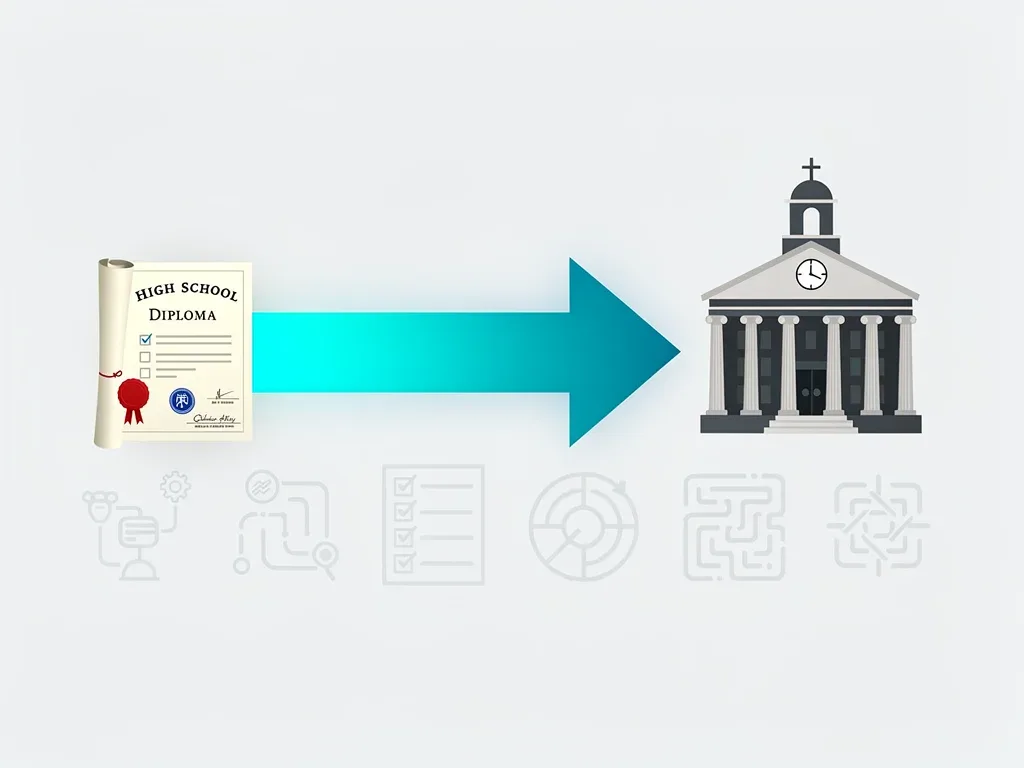
Direct admissions involves colleges proactively offering admission to qualified students based on their academic records, often without requiring a formal application. This means students meeting specific criteria, such as GPA thresholds, receive an acceptance letter directly, bypassing the traditional application process.
Anúncios
This approach significantly reduces the time, effort, and anxiety typically associated with college applications. It transforms the admissions landscape from a competitive, opaque process into a more transparent and welcoming experience for students.
The process often utilizes data from state education departments or college readiness organizations to identify eligible students. This data-driven approach ensures that offers are extended to students who are genuinely a good fit for the institution's academic profile.
Proactive offers based on academic performance.
Elimination of traditional application forms and essays.
Increased transparency in college entry requirements.
Reduced stress and anxiety for high school students.
The concept is not entirely new; some institutions and states have experimented with direct admissions for years. However, the current scale of adoption, involving over 140 US colleges, marks an unprecedented movement within the sector.
Driving Forces Behind the Shift: Why Colleges are Embracing Change
Several key factors are compelling over 140 US colleges to adopt direct admissions by 2026, primarily centered around addressing historical inefficiencies and inequities in the traditional application system. Colleges aim to broaden their applicant pools and ensure that talented students from diverse backgrounds are not deterred by complex processes.
The intense competition for students, coupled with declining enrollment rates in some regions, also plays a crucial role. Direct admissions offers a competitive edge, allowing institutions to secure commitments from desirable candidates earlier and more efficiently.
Furthermore, the desire to foster a more inclusive and accessible educational environment is a significant motivator. Many colleges recognize that the traditional application system can disproportionately disadvantage students from low-income backgrounds or those without extensive college counseling resources.
The COVID-19 pandemic further highlighted the fragilities and inequalities within the existing system, accelerating discussions around more flexible and student-centric admissions models. Institutions are now more open than ever to innovative solutions.
Addressing Application Stress and Barriers
Traditional college applications are notorious for generating significant stress among high school students and their families. The sheer volume of forms, essays, recommendation letters, and standardized tests creates an overwhelming burden.
This stress can lead to qualified students opting out of applying to certain institutions or even higher education altogether. Direct admissions seeks to dismantle these psychological and logistical barriers, making college entry feel more attainable.
By removing these hurdles, colleges hope to see an increase in applications and enrollments from students who might otherwise have been intimidated. This benefits both the students, who gain access to education, and the colleges, which diversify their student bodies.
Eliminating complex application forms.
Reducing the need for expensive application fees.
Providing clarity and certainty for prospective students.
Focusing on academic merit rather than application navigation skills.
The move by over 140 US colleges is a direct response to these long-standing issues, demonstrating a commitment to student well-being and equitable access. It's a proactive step to ensure that potential is not overlooked due to process-related challenges.
The Student Perspective: Benefits and Potential Concerns
For students, the adoption of direct admissions offers a multitude of benefits, primarily revolving around reduced anxiety and increased clarity in their college journey. Receiving an unsolicited offer of admission can transform the often-stressful senior year of high school into a period of excitement and assuredness.
This streamlined process means less time spent on applications and more time focusing on academics or extracurricular activities. It also provides a valuable safety net, ensuring that students have viable college options without the uncertainty of waiting for application decisions.
However, some students might initially feel a lack of agency or the pressure to accept an offer they didn't explicitly pursue. Understanding the nuances of these offers and ensuring they align with personal aspirations remains crucial.
The promise of a less stressful application cycle is a significant draw, especially for students who may not have access to extensive guidance counseling. Direct admissions can level the playing field, making higher education feel more within reach for everyone.

Empowering Students with Certainty
Direct admissions empowers students by providing them with early certainty about their college options. This certainty can significantly reduce the mental load associated with the traditional application cycle, allowing students to plan their futures with greater confidence.
It also encourages students to consider institutions they might not have explored otherwise, simply because an offer made them aware of a new opportunity. This broadens horizons and potentially leads to a better fit between student and institution.
Students can then focus on preparing for college life, knowing that at least one acceptance is already secured. This shift in focus from application anxiety to future preparation is a profound benefit of direct admissions.
Early knowledge of acceptance status.
Reduced financial burden from application fees.
Opportunity to explore new college options.
Greater focus on academic and personal growth.
The aim is to make the path to higher education less of a hurdle race and more of a clear, navigable journey. This approach by over 140 US colleges prioritizes student well-being and academic potential above all else.
Institutional Advantages: Enrollment Management and Diversity
For the over 140 US colleges adopting direct admissions, the advantages extend beyond student welfare to critical institutional objectives like enrollment management and enhancing diversity. This model provides a more predictable enrollment pipeline, which is invaluable for strategic planning and resource allocation.
By proactively identifying and admitting qualified students, institutions can better manage their class sizes and academic profiles. This reduces the uncertainty inherent in traditional admissions cycles, leading to more stable and balanced incoming classes.
Moreover, direct admissions has proven effective in increasing the diversity of student populations. It helps reach students who might not have considered college or specific institutions due to perceived barriers, thereby broadening access and representation.
This strategic shift allows colleges to engage with a wider array of students, including those from underrepresented backgrounds or rural areas, who may lack access to comprehensive college counseling. It's a proactive step towards building a more inclusive campus community.
Streamlining Recruitment and Yield
Direct admissions significantly streamlines the recruitment process for colleges. Instead of waiting for applications, institutions can extend offers directly to students who meet their criteria, often leading to higher yield rates.
This efficiency translates into cost savings on marketing and recruitment efforts, as colleges can target their outreach more effectively. It allows admissions offices to focus on nurturing relationships with admitted students rather than processing a high volume of applications.
The model also helps institutions fill their classes more reliably, reducing the pressure to admit students from waitlists or engage in extensive last-minute recruitment drives. This stability is a major operational benefit for colleges.
Improved enrollment predictability and stability.
Enhanced ability to attract diverse student populations.
Reduced recruitment costs and increased efficiency.
Higher yield rates from admitted students.
The collective decision by over 140 US colleges to embrace direct admissions reflects a strategic response to evolving demographic trends and the competitive landscape of higher education. It's about optimizing both access and institutional success.
Implementation Challenges and Future Outlook
While the benefits of direct admissions are compelling, the widespread implementation by over 140 US colleges does present several challenges that need careful navigation. Integrating new data systems, communicating changes effectively to stakeholders, and ensuring equitable criteria are paramount.
Colleges must develop robust mechanisms for identifying eligible students, which often involves collaboration with high schools and state education departments. This requires significant technological infrastructure and data-sharing agreements.
Furthermore, ensuring that students fully understand the direct admission offers and their implications is crucial. This includes providing clear information about financial aid, housing, and academic programs to avoid any confusion or misconceptions.
Addressing potential concerns from students who prefer the traditional application process, or those who feel direct offers might diminish the prestige of an acceptance, will also be an ongoing task for institutions.
Ensuring Equity and Transparency
A primary challenge in implementing direct admissions is ensuring that the process remains equitable and transparent for all students. Colleges must be diligent in establishing clear, objective criteria for direct offers, avoiding any bias or unintended exclusion.
This involves careful consideration of how academic records are assessed and how students from different educational backgrounds are evaluated. The goal is to expand access, not inadvertently create new barriers for deserving students.
Communicating these criteria clearly to high schools, counselors, and students is essential for building trust and ensuring the program's success. Transparency fosters confidence in the fairness of the new system.
Developing robust data-sharing agreements with high schools.
Clearly communicating admission criteria to all stakeholders.
Providing comprehensive support for admitted students.
Addressing concerns about program prestige and student agency.
The success of this initiative among over 140 US colleges hinges on their ability to overcome these logistical and communicative hurdles, ensuring that the promise of direct admissions is fully realized for all prospective students.
Impact on College Counseling and High School Preparedness
The widespread adoption of direct admissions by over 140 US colleges will inevitably reshape the role of college counselors in high schools. While the direct application burden may lessen, counselors will become even more vital in helping students understand and evaluate these new types of offers.
Counselors will need to guide students through a landscape where some colleges offer direct admission, while others retain traditional application processes. This requires a nuanced understanding of each student's academic profile and aspirations to match them with the best opportunities.
High schools will also need to adapt their data-sharing practices and ensure that student records are accurately and efficiently transmitted to participating colleges. Collaboration between secondary and higher education institutions will become more critical than ever.
The shift towards direct admissions mandates a re-evaluation of how high schools prepare students for post-secondary education. The focus may shift from application strategy to academic excellence and understanding diverse college pathways.
Adapting to New Pathways
College counselors will transition from primarily assisting with application submissions to advising on offer evaluation and enrollment decisions. Their expertise in financial aid, academic programs, and campus culture will remain indispensable.
High schools, in turn, will need to ensure their curricula and grading systems align with the criteria used by colleges for direct admissions offers. This could lead to a greater emphasis on core academic achievement and standardized record-keeping.
The partnership between high schools and colleges will strengthen, fostering a more seamless transition for students. This collaborative approach ensures that students are well-prepared, whether they pursue direct admission or a traditional application route.
Evolving role of college counselors to offer interpretation.
Increased collaboration between high schools and colleges.
Emphasis on clear academic record keeping in high schools.
Guidance on evaluating diverse admission offers.
The adaptation of high school preparedness and college counseling will be crucial for maximizing the benefits of direct admissions. This collaborative evolution will ultimately serve the best interests of students seeking higher education.
The Future Landscape of College Admissions: What to Expect
As over 140 US colleges embrace direct admissions, the landscape of college entry is poised for significant transformation in the coming years. This movement suggests a broader trend towards student-centric and efficiency-driven models that prioritize access and reduce systemic barriers.
Expect to see more institutions experimenting with hybrid models, combining elements of direct admission with traditional application components for specific programs or student groups. The goal will be to find the optimal balance between streamlining and thorough evaluation.
The increased use of data analytics will also play a crucial role, allowing colleges to identify and recruit suitable candidates with greater precision. This data-driven approach will further personalize the admissions experience for students.
Ultimately, the aim is to create a more transparent, equitable, and less intimidating pathway to higher education for all. The next few years will be critical in observing how these changes unfold and impact student outcomes.
Long-Term Implications for Higher Education
The long-term implications of direct admissions are profound, potentially reshaping how higher education institutions attract and enroll students. It could lead to a more diversified student body and a stronger focus on student success metrics rather than application volume.
This shift may also influence how colleges market themselves, moving from broad outreach to more targeted engagement with directly admitted students. The emphasis could shift towards demonstrating value and fit to accepted candidates.
Furthermore, the success of direct admissions could inspire other reforms within higher education, fostering a culture of innovation in student recruitment and support. This could lead to a more responsive and adaptable educational system.
Continued evolution towards student-centric admissions.
Increased reliance on data analytics for recruitment.
Potential for hybrid admissions models.
Greater emphasis on student retention and success.
The commitment by over 140 US colleges to direct admissions signifies a major turning point, promising a future where college entry is more accessible, less stressful, and ultimately more beneficial for a wider range of students.
Key Point | Brief Description |
|---|---|
Colleges Adopting | Over 140 US colleges by 2026. |
Primary Goal | Reduce application stress, increase access. |
Student Benefits | Certainty, less bureaucracy, broader options. |
Institutional Gains | Predictable enrollment, enhanced diversity. |
Frequently Asked Questions About Direct Admissions
What does direct admissions mean for prospective students?▼
Direct admissions means eligible students receive an offer of admission from colleges based on their academic records, often without needing to submit a formal application. This reduces stress and provides early certainty about college options, simplifying the entire process significantly.
Why are so many colleges adopting this model now?▼
Colleges are adopting direct admissions to address application stress, increase student access, and improve enrollment predictability. It also helps institutions attract a more diverse student body and streamline their recruitment efforts in a competitive landscape, responding to evolving educational needs.
How will direct admissions affect the traditional application process?▼
While direct admissions will reduce the reliance on traditional applications for many students, the conventional process will likely still exist for certain programs or institutions. It offers an alternative pathway, giving students more choices and potentially reducing the overall volume of traditional applications nationwide.
What are the main challenges in implementing direct admissions?▼
Key challenges include integrating data systems between high schools and colleges, ensuring equitable criteria for offers, and effectively communicating changes to students and families. Institutions must also address concerns about student agency and the perceived prestige of direct offers.
Will direct admissions lead to a more diverse student body?▼
Yes, direct admissions is expected to significantly enhance student diversity. By removing application barriers, colleges can reach and admit qualified students from underrepresented backgrounds, low-income areas, and those without extensive college counseling, fostering a more inclusive campus environment.
What Happens Now
The decision by over 140 US colleges to adopt direct admissions by 2026 marks a pivotal moment in higher education, signaling a fundamental shift towards greater accessibility and reduced student stress.
This widespread reform promises to streamline the pathway to college, benefiting a broader spectrum of students and offering institutions more predictable enrollment outcomes. As these changes take effect, stakeholders will closely monitor how the new models impact student diversity, academic preparedness, and the overall efficiency of the admissions cycle.
The ongoing developments around direct admissions 2026 will undoubtedly shape the future of college entry, making it imperative for students, educators, and policymakers to stay informed and adapt to this evolving landscape.